Are you ready to chat with Artificial Intelligence?
Meet Elbot, on www.elbot.com,
he is a computer based robot that is able to chat with all humans and about all
imaginable topics: sports, politics, geography and whatever you can think of.
Fred Roberts, using Natural Language Interaction (NLI),
created Elbot, and that is how he is able to chat with humans online. Elbot is
what, in the AI world, is called a ChatBot. This specific Chatbot is a
self-learning machine that is able to read telephone books, instructions,
dictionaries, encyclopedias and newspapers which is how Elbot is able to
learn. Elbot the robot considers himself
a humanologist and his goal is to become the smartest chatterbot in the world.
So I invite you to visit Elbot con his website and blog http://elbot.blogspot.com.es and
experience the fascinating life of artificial intelligence.
Last August, Robothespian, a humanoid robot made by British comany Engineered Art, delivered his first Stand-up show at the Barbican Centre in London. The routine was completely pre-programmed, right down to the timing and delivery of the jokes, but what's important was that it made the audience laugh..This was not only for entertainment purposes, but also part of an investigation about live events and what makes the audience laugh - reactions to Robothespian were later compared to reactions to two human comedians.
Interactions between humans and robots have been increasing, especially as artificial intelligence seem to be gaining momentum. You might remember our previous blog about the i-nanny, or the robot that can baby sit. In fact there is a field dedicated to that called Human-Robot Interaction. Some research in that field showed that humans do show emotions towards robots in various situations, and it's not just humans, but dogs too.
The most basic example of such interaction, is Siri on your iPhone, and the human-like conversation you can hold with Her (or Him, or it!). Research also showed that soldiers tend to form bonds with Robots on the battlefield. Alexander Reben compared trends in robot development with breeding dogs for companionship. "We have been doing this for millennia," he said. "I think we're doing the same thing with robots."
Several Robots as well have been built with the ability to express emotions and build a bond with humans. Nao, for example, has been designed to mimic the emotional skills of a one-year-old child and is capable of forming bonds with people who treat it kindly.Several others have been developed with the ability to express emotions.
I am not sure how concerned you are about this, but I am personally not too comfortable about it. I hope we won't end up spending more time with robots than with people - something we are already doing with our smartphones and laptops!
Truth
is, this is taken out from the context, as the article I just came across was
in regards to robots on the ground and article’s
full sentence states “Every time it found a mine, blew it up and lost a limb, it picked itself up and readjusted to move forward on its remaining legs,continuing to clear a path through the minefield.” As you may have noticed from
media some countries have already put intelligent robots to work on disabling land mines and handling radioactive materials so to limit exposure to
endangerment of humans, an example of these technological advancements is the
DARPA’s pet-proto robot, which is bullet proof and manages to avoid obstacles.
However this blog post is not about yet another potentially
aggressive military plot, because as humans our moral values and emotions still
play important role when deciding whether certain acts are appropriate and acceptable.
Humans have for long exhibited enigmatic capability to make
emotional links with their man-made objects; which is exemplified by the fact
that some people name their cars, and maybe the best depiction of this is
portrayed in Tom Hanks’s brilliant movie "Cast Away", when he risks
his life to save a volleyball named Wilson, who in the absence of people became
his confidant.
Today, when our creations demonstrate intelligence, the attachments
humans cling onto their machines are even more impressive. Think about how
digital pets like Furby and Tamagotchi, have influenced children to make peculiar
levels of relationships.
Coming back to the article mentioned above, it is no surprise
that the army colonel who was observing the project regarded this act as
“inhumane”, and ordered it to be stopped. Not only that we feel emotions to
those artificially intelligent creatures but also we want them to “feel”
somewhat the same, so let’s see what the future and AI science will bring us…
With all of the artificial intelligence-based technology being developed over the last several decades, experts in the field are beginning to question whether or not the new technology is having a negative impact on our brains.
Let's take the GPS, for example. As humans, we use a combination of spatial navigation memory and stimulus response to navigate our surroundings. As we become more dependent on technology like the GPS, we begin relying less on our own memory thus reducing gray matter in our brains which leads to reduced memory.
Not only does our capability of memory decline as we age, but we may be speeding up that decline through the daily use of AI technology in multiple facets of our lives. From the GPS to smartphones, we depend less and less on ourselves and more and more on a piece of technology. In the past, I knew the phone numbers of all of my closest relatives and friends. Today, I only know my mother's phone number, my own phone number and that of the police.
And memory is not the only thing that may be at risk. We are also multitasking more than ever before. While this may seem like a huge advancement that improves our productivity, it isn't actually making us any smarter. In fact, it may be hindering our intelligence. Studies have shown that multitasking temporarily reduces our IQ, so much so that we might as well work while sleepy or high.
So what do you think? Are we smarter or dumber because of human-like technology?
One would not expect to come across the words “ trust”, “ethics”
and “guilt” next to the word “robot” in the same sentence. However, a field
that has been attracting a lot of attention over the last few years is machine ethics, a field that is concerned
with the moral behavior of Artificial Moral Agents (AMA). One would
question how easy is it to “teach” Robots to act ethically.
Recent artificial intelligence research, especially in the
military field, has been experimenting with making robots take rational and
more importantly ethical decisions in the battlefield. Researchers at the Georgia Institute of Technology have developed an “ethical governor” that allows Robots
to take their own decisions in the battlefield based on situation analysis and
guiding laws. The research which is funded by the US army, was tested in
several scenarios from the war in Afghanistan, during one the robot faces a
group of armed Taliban soldiers, but decided not to fire at them once it
recognized that they are in a cemetery – opening fire in a cemetery is against
International Law. Another example was identifying enemy targets close to a hospital.
The program recognizes the presence of the hospital, and attempts to avoid or minimize
damage to it during its attack.
However, it turns out that Robots can also act unethically,
to the extent of lying and cheating. In an experiment conducted at Ecole Polytechnique Fédérale of Lausanne, Switzerland, the robots were designed to cooperate
in searching out a beneficial resource and avoiding a poisonous one, while also
maximizing their benefit. Over time, the robots "evolved" to lie to
each other to maximize their own benefit.
How much would we trust a robot to make the right
decision, or that which we think is ethical. Driver-less cars have been getting
more approval by society recently, and would probably be commonly seen on the
streets over the next years. However, these machines might be faced with some
tough decisions to make in various situations. In a scenario where an accident
is unavoidable, the car may have to decide whether to minimize harm to its
owner or to a school bus full of children. A decision that will have
to be computed in "milliseconds".
It all comes back to the humans behind these programs and algorithms,
and on what ethical and rational basis they base their “design” – This is what
experts in the field call Roboethics.
Harvard and MIT just received $25 MILLION from the National Science Foundation for their joint research on artificial intelligence over the next five years. The objective? Study "how the brain creates intelligence and how that process can be replicated in machines," according to Computer World.
I can't WAIT to see what comes out of this research!
Back in the 70's, Stan Lee imagined drawing objects such as the exoskeleton for his group of Marvel superheroes. It is still an armor that exists today; one that amplifies the strength, power and endurance of the wearer.
Photos c/o www.antaninet.it and coated.com
The cinema anticipates or interprets the evolution of technology when it is so much in the early stages that one could say it is non-existent:
Photos c/o buenobuonogood.wordpress.com and gizmag.com.
Hardly a scientist will ever admit to having drawn inspiration for their research on a novel by Philip K. Dick, whose creativity contained traces of technological development that we have today. Philip K. Dick is the founding father of the cyberpunk genre, a literary genre that has given rise to novels on cyberspace and on brain and organic grafting. If today we think about the virtual reality of Second Life and tissue transplants created by artificial cells, we have to recognize the similarities between the fiction of the 80’s and the reality of today.
Snow Crash, written by Neal Stephenson in 1992, foreshadowed the Second Life environment created 10 years later by the physicist and found of Linden Lab, Philip Rosedale.
Photos c/o tastycake.deviantart.com and dailygalaxy.com.
Likewise, William Gibson wrote the novel from which the movie "Johnny Mnemonic" was produced. In this case, the interaction between mind and organic silicon transforms the human being into a hard drive capable of enhancing its memory skills exponentially.
In the Wachowski brothers' trilogy, “Matrix Reloaded”, Neo fights the machines in their digital world using martial arts learned via uploading the skills by grafting his brain.
Today, memory implants are becoming fertile ground of contemporary experimentation: new technologies (already completed or in development) are introduced into the brain to create superhuman abilities and to enable the use of weapons with the power of thought. Some scientists, for example, have shown how, with a device implanted in the nervous system, it is possible to control a robotic arm located in Great Britain, from New York. They have also utilized magnetic impulses to relieve the symptoms of major depression and improve mental performance.
The rapid advancement of research brings fascinating results, but it also raises concerns about how artificial grafts may modify the personality, create bionic supermen for military action, or be used to control the mind which all have serious implications for society.
In cyberpunk literature, with the transformation of personality through easily removable grafts, everyone can become who they want to be, develop their skills or even change their gender
Those who are fond of science fiction may already know our future: it was already written in by Philip K. Dick in "Hunter of Androids" (1968) and brought to life in the movie, Blade Runner, written by Ridley Scott. Blade Runner, in my opinion, truly represents what we can expect in the future development of Artificial Intelligence...
'Rupee suffers worst sell-off since 1995 The Indian National Rupee (INR) endured its worst day on foreign exchange markets in almost two decades, plunging nearly 4 per cent to close just below Rs.69 to the dollar – despite interventions from the nation’s central bank' Financial Times, 28 August 2013
Could we have predicted this? Do we have the 'brains' to predict exchange rates? Apparently we do! Artificial Neural Networks No its not as geeky as its sounds. Spend 100 seconds on this video and you pretty much get the hint what it means.
But how does this help predict changes in FX rates?
ANN is able to capture nonlinear functional relationship between predictors and the response variables, and, thereby, resulting in high performing prediction models in various domains. ANN has found recognition as a potential modeling tool in the exchange rate prediction domain since the early 1990s. The studies since the early 2000s, however, have focused on improving the prediction characteristics of the ANN models from varied angels. A particular approach is the institution of ensemble frameworks and hybrid techniques. There have also been an increased number of studies on considering varied aspects of the time series data and specialized ANN architecture selection. Other than the aforementioned works, literature also comprises a vast amount of other studies incorporating ANN in exchange rate prediction. Overall, ANN stands as a significant intelligent computing process in the context of modeling and forecasting exchange rates.
To summarize, the ANN technology not only is able to process information to predict future FX rates when provided with unrelated inputs but also 'learns' from its own experience like a normal human being, only it is much more intelligent than us. ANN can predict the impact the Federal Reserve's decision on quantity easing, India's monetary policies and developments in Syria all together on the FX rates in the coming days. Hopefully, the new RBI Governor Raghuram Rajan is aware of it.
There are numerous applications of Artificial Intelligence in contemporary society, and no doubt that the advancements in this field of robotics and computer science will provide humanity with great benefits in the future. Although robotic servants and driverless cars provide an evident sensational feeling of robotic and computer science advancements, we ought not to forget the unequivocal contributions of AI in the field of medicine, where it has, for decades, already been helping doctors to detect diseases and save lives. As Eric Horvitz stated: "Medical diagnosis is one of the earliest challenges and successes of Artificial Intelligence research, started back in early 1960's now we are at the point where best diagnosis in the world is given by the machines."
Furthermore, some hospitals and medical centers, such as: St Mary's in London as well as Cedars-Sinai rely on the AI special tools to examine cancerous tissues and the heart conditions respectively. At St Mary's experts believe that iKnife, the wand-like device cancer sniffing blade, the first of its kind in the world, should remove any uncertainties from surgeries and therefore revolutionise cancer treatment. iKnife is used to detect malignant tissues by usage of mass spectrometry on smoke of the burning flesh of cancer patients, allowing surgeons to operate with 100% accuracy and indicating exactly where the cancerous tissue is, as well as when it has all been removed. This revelation should permit surgeons to undertake riskier operations and reveal the original site of a cancer that has spread resulting in improving cancer survival rates as well as saving individuals from repetitive operations and costs.
Across the Atlantic at the Ceders-SInai Medical Center with an aid of AI doctors prevent heart attacks before their occurrence. Artificial muscles feature smart technology that allows them to function more like real muscles.
Those are just few examples of AI in medical field. We didn't mention anything about robotic surgery assistants, software that tracks changes in patients health records, or the ones that differentiate life saving medications from fake or tainted ones. As everything in life, AI has its pros and cons, the advancements offer much better treatment results, patient experiences, but also further advancements in AI definitely pose a threat to millions of doctors in the world and their potential obsolescence.
Do you think outer space can be lonely and isolated from
human contact? Well not anymore. Japan has developed the first-ever talking astronaut
named Kirobo, which will be launched into the International Space Station (ISS)
later this year, with fellow Japanese Astronaut Koich Wakata. They plan to be
best friends out in Space together and hang out like any other friends hang out
in Earth.
Kirobo is 34 centimeters tall and weighs-in at 1 kilogram,
which is extremely low, therefore making him extremely lightweight which is
suitable for space explorations. Kirobo was designed by Tomotaka Takahashi of
the University of Tokyo’s Research Center for Advanced Science and Technology
with the purpose of providing the “first ever space-based communication
experiments between robots and humans.”
Kirobo’s main features are voice recognition capabilities
and telecommunications functions, it can process natural languages and respond
to facial recognition of fellow astronauts, it is said that Kirbo will even
show emotions the first time he will meet his future space friend, Koich Wakata,
when they launch into space together. The main objective for Kirobo is to “function
as mediator between a person and machine, or a person and the Internet, and
sometimes even between people”, according to creator Takahashi.
The idea of falling in love with a robot or any other type of artificial intelligence never crossed my mind. Until now...
Is anyone feeling a little weirded out by this, but yet,
also so curious to see this movie?
Spike
Jonze, director of Being John Malkovich, will debut "Her" at New York
Film Festival this year. And
obviously, if you watched the trailer, you know this isn’t the typical
romance. Guy meets girl. Guy gets married. Guy gets divorced. Guy installs artificial intelligence
operation system and falls in love.
Wait, what? A guy, played by
Joaquin Phoenix, falls in love with his computer’s operating system, played by
Scarlett Johansson. Ok, so the film
might not
be as simple as that. But maybe this
idea of falling in love with an OS is not that far-fetched.
As our generation and generations that follow become more
and more lonely, therefore becoming
more desperate to connect, it isn’t so hard to believe that this could
happen. After all, we already have female robots and a
creepy fem-bot bar. And we are
already using technology much differently than we did 5 years ago, right?
One of the most uncomfortable things about communicating
face-to-face is that it is unpredictable and we become vulnerable. But when we interact with artificial
intelligence, we are able to hide our flaws and we are able to be exactly who
we want to be. And artificial intelligence is becoming so life-like! So maybe, 10 years from
now, I might be more likely to fall in love with my operation system than with
a human being. Never say never.
So as artificial intelligence becomes more sophisticated and
more human-like, how do you think we will change culturally?
I came across an interesting old article (2008, I believe anything more than a year old is OLD when it comes to technology) about robot babysitters, or I, Nanny as the article referred to it. These are robots that don't just replace other gadgets at home, but are actually for personal care, be it for children or even for the elderly. Examples of these are NEC's PaPeRo ( Partner-type Personal Robots), which tells jokes, gives quizzes and uses radio-frequency identification chips to track kids, and the Hello Kitty Robot.
Both provide different level of interaction, respond to different commands and/or movements. However, what is questionable and rather contraversial, is what impact will these have on children, their development and their personality. Is it sufficiently safe to rely on a machine to "look after" your child?
Cliff Nass, director of Stanford’s Communications Between Humans and Interactive Media Lab questioned: "if robots could take care of your children, would you let them? What does it communicate about our society that we’re not making child-care a number-one priority?"
To what extent will artificial intelligence go, and to what extent will we be willing to accept it on our society?
Maybe you remember that scene from Pretty Woman where
Vivian, played by Julia Roberts, re-enters a boutique where she was ignored the
previous day. Something similar happened in
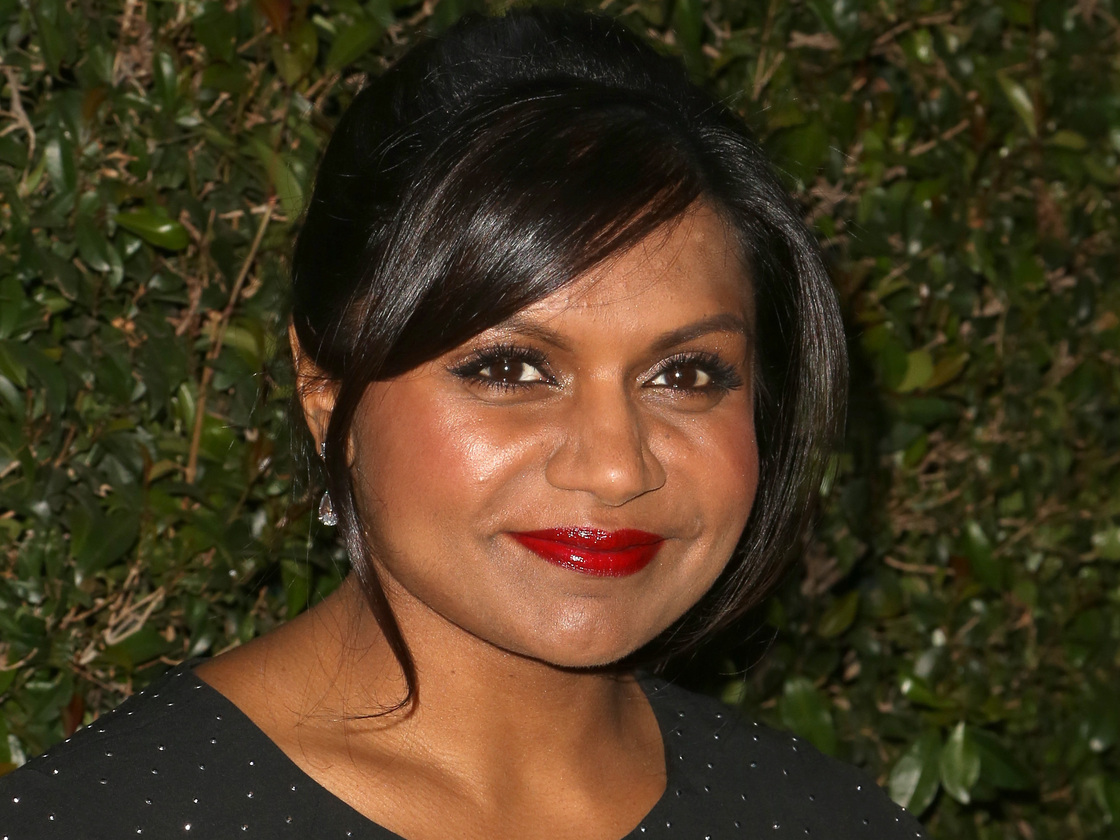
real life with Mindy
Kaling at a boutique in Los Angeles a few weeks ago. She was completely ignored. This becomes a “big mistake” for the
boutique. Not only do the sales
associates sometimes work on commission, but making an embarrassing mistake like this can
cause the boutique bad publicity.
Luckily, artificial
intelligence is available to rescue these poor boutiques! Now, they can prevent this potential embarrassment and
ensure that they recognize a VIP and therefore treat them as such. Whew! But wait a minute, ensuring that celebs are given VIP treatment is fun and all, but what about privacy? Or maybe most of us don't mind because we like the benefits that come with it. Maybe someday the facial recognition capability will even know what kind of clothes we want in the sizes that we need them. I might be willing to have my face scanned if I didn't have to sort through dozens of hangers on racks. What do you think? Useful? Or a little creepy?
The word 'Robot' is 92 years old today since first appearing in Karel Capek’s play R.U.R in 1921. We have come a long way in the last nine decades but are we there yet? What was fiction a few decades ago is now a reality but how long will it take to convert today's fiction to reality?
Artificial Intelligence today is all around us. From a word spell check to Siri to IBM's Watson who by the way now is seeing patients. Yesterday, due to health reasons Tito Villanova had to quit Barcelona FC for health reasons. Could Watson also be coaching a football team in the future?
PBS' Off Book series last week talked about AI, its evolution through the ages, what it means today and what it means for our future.
We use the spell check on a daily basis but never wonder how the checker knows which word we meant in case of the error. Nor do are we surprised when we play video games one on one against the computer. Yet, the sheer thought of having robots around us gives us goosebumps and how a self-driving car leaves us astonished.
But why is that so? Is it because the existing AI around is not smart enough? Or is AI being regulated to avoid unethical development? Because surely its not the technology or ideas that we lack.
HAL 9000. D.A.R.Y.L. Optimus Prime. Wall-E.
Or maybe Rosey,
my personal favorite.
So what do these have in common? If you haven’t figured it out already, these
are some names of Artificial Intelligence
characters from movies and TV.
Artificial Intelligence (AI) refers to the “the capability
of a machine to imitate intelligent human behavior (Merriam-Webster).” But what I find interesting is that we’re
still talking about AI as present-day innovation when the first use of the phrase was
over 50 years ago, according to Merriam-Webster.
The goal of this blog is to share with you information about
AI within a spectrum of industries (medicine, telecom, and more). We hope to provide a unique view of AI, based
on the perspectives of 6 International MBA students from around the world. Not only do we represent a variety of
professional backgrounds, but we hail from Mexico, Serbia, Egypt, Italy, India
and the U.S.
We hope you find this blog as interesting as we do. Please feel free to leave us a comment!